The Conductor in the Machine vs The Conductor of the Machine
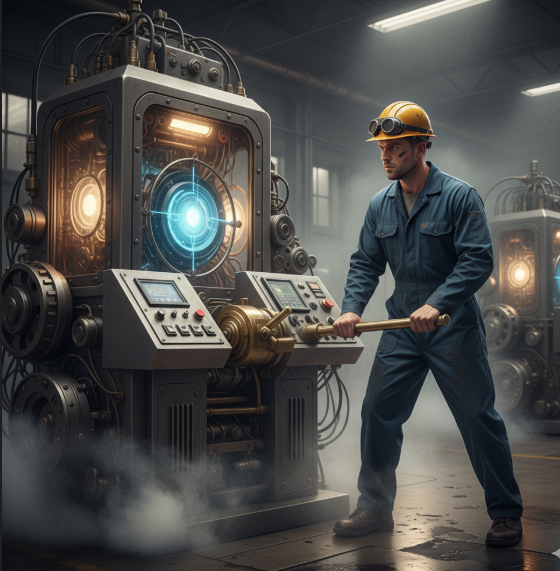
It started with a simple idea: build an AI crew for cancer research as a demonstration of how powerful the technique could be. As the human in the loop building the team I called myself the AI Orchestrator. The title felt right. I was arranging the pieces, setting the tempo, and guiding the performance from my podium.
So I assembled a team of synthetic experts: a geneticist, a structural biologist, a control systems engineer and gave them a mission: cure brain cancer with bee products and they delivered a brilliant, cohesive plan. I wrote about it and moved on.
But then, a problem emerged.
To make the crew's final output coherent, I had added one last agent to the team. Its role was to take the dense, technical outputs from all the other specialists, synthesize their findings, and write the final, human-readable strategic brief. It was the agent responsible for the final arrangement of the symphony, the one that ensured all the parts came together.
This was the actual AI Orchestrator.
And there it was. A paradox.
I, the human, was standing outside the system, designing the entire thing. Yet, an AI inside the system was also performing the task I called orchestration. If the LLM was the conductor, what was I? A manager? A prompter? A user?
I had decided which specialists were needed. I chose the AlphaFold expert over a radiologist. I decided a Pragmatist agent was non-negotiable. I had curated their knowledge base and defined the workflow. These were acts of architectural and curriculum design as well as process engineering.
So the AI agent I had built was the Conductor in the Machine. It operated within the rules I had set.
But I was the Conductor of the Machine.
My job wasn't to wave the baton during the performance. My job was to write the symphony, to design the concert hall, to audition the musicians, and to hand the finished score to the conductor in the machine.
A new term is needed for the person who designs the system. A title that captured the vision, the structure, and the profound responsibility of building these new entities. The role isn’t one of performance, but of creation.
The role is that of an AI Crew Architect.
AI Crew Architect: The essential human focused on the design, curation, and workflow engineering of multi-agent AI systems. Unlike an AI Orchestrator (an agent within a system), the Architect is the human visionary who designs the system itself: choosing the specialists, curating their knowledge, and defines their mission.
AI capability will undoubtedly expand but critical to a non derivative system is the human creativity needed to inspire. That is the role of the AI Crew Architect.